My Tiny Tribe

belonging-painting-6x9

“Belonging,” Nancy Woods, acrylic, 9×12 inches

With this blog post, I honor my students’ anthology, “BeLonging,” because who doesn’t want to fit in?

In my imagination, I belong to a small group of people exactly like me—writers and artists who, according to at least one study, make up less than 2 percent of the U.S. workforce.* To make my group even more select, I belong to the chapter of right-handed, left-wing writers and artists—solitude-seeking people who long for country roads, blackberry bushes and crumbling fences.

The members of my tiny like-minded tribe—which exists only in my dreams— are known for being complacent. How complacent, you ask? We’re so complacent we don’t even decide which books we’ll read. Instead, when we need some literary input, we walk into the nearest library, grab the first “staff pick” off the shelf and walk out, well, after checking the book out.

This make-believe army of mine and I are psychologically unable to experience the moment. Instead, we must write a poem about it, paint it or take a photo of it. Unwilling or incapable of simply living life, we document every exquisite event. To us, my herd of duplicators, life is so tender and vulnerable, so flimsy and fleeting, so painfully precious that we’re forced to continually capture it with words, on film and on canvas.

Hear that bird? Quick. Write a song about it.

See that forest log smothered with ivy? Snap with your camera.

Fall in love? Turn it into flash fiction.

To us, the members of my clutch, life is so sweet, so fragile and irreplaceable, so diaphanous and dying, that just living it is never enough. We’re compelled to gather it, hold it, harbor it, seize it, save it, so we can savor it over and over again. More than one of us has taken a photo of a painting of a photo of a painting. No distance from reality is too far to be traveled.

Highly excitable as children and proud of it, my people and I were the class clowns, the sit-down comics sent to the principal’s office to calm down and shut up. At family dinners, we laughed at our own jokes while snorting milk out our nose. Equal-opportunity insulters, we find humor in everything, including ourselves.

Diversity-relishing nap takers, my cohorts and I also are death-, dog- and phone-fearing note takers. We’re tree-needy, coffee-slurping, near-sighted, frizzy-haired joke meisters. We’re PC-using, Apple-wary goofballs. We’re road-tripping, list-making, understated-English-drama-binging, out-the-window-staring caretakers of cats.

My miniscule group imposes no dues, performs no rituals. The only requirement for membership is that you must think, feel, act, look, taste and smell exactly like us. You must enjoy food but decline to cook. You must drive a car but wish you didn’t. You must love everyone, if just in the abstract.

If the local chapter of my assemblage ever got together (which is doubtful because we hate meetings), the event could be held in my living room, which seats six. If you want, you can apply to become a member of my group. But I must warn you, we have a reputation for not getting back.

*https://www.arts.gov/news/2011/nea-announces-new-research-note-artists-workforce

Nine ways to make your editor smile

lou-grant-on-the-phone

Remember “Lou Grant,” the TV show in which actor Ed Asner played a gruff, unsmiling newspaper editor? Well, that TV character isn’t totally made up. In fact, he has a lot in common with real-life newspaper and magazine editors.

I’ve worked both as a writer and editor, so I know what it’s like to sit on both sides of the desk. One lesson I’ve learned is that publishing isn’t a democracy. The sooner writers (including me) accept that fact, the happier—or at least less annoyed—we’ll be.

But wait a minute, you may ask. Aren’t editors standing on the shoulders of writers? Without writers, wouldn’t editors be out of a job? Well, maybe. But that doesn’t mean the writer is in charge. Who’s in charge? The editor, of course—the rude, caustic, short-tempered, abrupt person who “deals with” your copy to make it “fit to print.”*

So what is the writer’s job? To make her editor smile, or at least not growl, by following these rules:

1. Never miss a deadline. As a writer, you have a deadline with your editor but that’s not the end of the story. Your editor has deadlines, too—to pass the edited copy along to the next person, whether it’s a copy editor, designer or whoever. If one person is late with copy, it affects everyone down the road. Who wants to work with someone who’s consistently late? No one. And chances are, you’re not the only writer your editor is working with.

Think of your deadline an immovable object that doesn’t care if your cat slept on your printer or you need to catch a bus to use the free Wi-Fi at the brewpub. (Yes, writers have offered both those excuses to me for submitting late copy.)

The relationship between a writer and editor is based on trust. If she can’t count on you to make your deadlines, she’ll find someone else.

2. Woman up: Deliver the bad news. If for any reason you must miss a deadline, let your editor know as soon as possible. Don’t put off telling her because of a possible negative response. It’s your job to let the editor know so she can make any necessary changes in assignments.

3. Don’t pitch on deadline. The minute after you submit your copy is not the best time to send your editor an idea for your next article. Wait a few days at least.

4. If in doubt, email. Most editors I know hate the phone. Why? Because, too often, it rings at the wrong time, in contrast with emails, which are easier to respond to when it’s convenient. Save phone calls for emergencies.

5. Stick to the point. Don’t dump several topics into one email. Include only what your editor needs to know about your most immediate project.

6. Recap. Don’t force your editor to recall what article you’re working on. Never send her an email that requires her to find an earlier email or assume she can quickly and easily remember all the issues and players involved in your story. Instead, if you’re communicating by email, include a short recap. For example:

Subject: Snowmobile article

Hi, Andy – As you know, the angle on the topic is safety. John Wilson, the owner of SnoGo, whom I interviewed yesterday, suggested I go to Big Business Lobby for comments about safety concerns. I was thinking Association of Outdoor Enthusiasts might be a better choice. What do you think? Sam

7. Provide print-ready answers. When an editor emails you a follow-up question about your article, don’t expect her to write your revised copy for you. Instead, provide copy she can paste into the article. For example:

Emailed question from editor:

Sam – In your snowmobile article you said “SnoGo is the oldest snowmobile company in the area.” How old is the company and what area are you referring to? Andy

Instead of responding like this:

Sorry, Andy. I should have made that clearer. My bad. J  SnoGo is 20 years old. By “area” I meant the Seattle vicinity. Sam

Respond like this:

Andy – Use this: SnoGo, founded in 1976, is the oldest snowmobile company in the Seattle area. Sam

8. Spell it right. Double- and triple-check spellings of names, especially names of people and businesses. People often intentionally spell things in unusual ways.

9. Provide complete photo captions. In addition to an article, you may also be asked to provide photos and captions.

This does not count as a photo caption:

The guy in the red hat is Frank Jones. Next to him is his daughter Sarah. They’re standing in front of their store. I took the photo.

Instead, write this:

(left to right) Sarah Jones and her father, Frank Jones, stand in front of the Jones Family Grocery Store. (Photo by Terry Camden)

*“All the news that’s Fit to Print” is the motto of the New York Times. http://www.nytimes.com/

https://nancy-woods.com/

nancy@nancy-woods.com

http://www.amazon.com/Under-Influence-Trees-Nancy-Woods/dp/1312256427

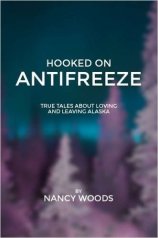
http://www.amazon.com/Hooked-Antifreeze-Nancy-Wilbur-Woods/dp/1304334708

Kickstart Your Writing class starts October 5

What: Kickstart Your Writing class

When: Wednesdays, October 5-December 14, 2016. No class November 23

Time: 6:30-9 p.m.

Location: Northeast Portland, Oregon. Exact address provided upon registration.

Cost: $200/10 weeks

Whether you’re working on a novel or interested in short stories, memoir, essays, articles or other forms of fiction or nonfiction, this Kickstart Your Writing offers a fun, supportive environment in which you can work on specific writing projects. Students set weekly goals, read their writing at designated times and receive feedback from the instructor and other students. Class is limited to 5 students.

To register online: https://nancy-woods.com/classes/

For more information: nancy@nancy-woods.com, nancy-woods.com, (503) 288-2469

Why I read the obituaries

Why I Read the Obits 3x

[In this post, Kickstart Your Writing student Michael Cannarella reveals his fondness for reading obituaries. He then takes his interest one step further and suggests that writing fictional obituaries gives writers an opportunity to hone their craft, especially when it comes to character development and capturing a life in an anecdote, a few words.]

By Michael Cannarella

Many years ago I rented a room in Marquette, Michigan in a large house overlooking Lake Superior. The house originally belonged to a judge and his wife. Only the judge’s old wife was left in the house. (I shoveled the drive as part of my room rent obligation). I usually saw her when the local newspaper was delivered in the evening. She picked it up and immediately turned to the obituaries in the newspaper.

At the time I thought her behavior was notable and strange. Now for me, many years later, I understand. I read the obituaries. Like listening to a good piece of music, they are something I can read more than once and enjoy. Here is a person’s life encapsulated in a few paragraphs. I know these few paragraphs capturing a life have a tendency to “pretty things up” but heck they may be the last words written about a person. If we “pretty things up,” it’s like giving another human being the benefit of the doubt, no more than what we would wish for ourselves. So each obituary goes: Here lies a human, washed, dressed, hair combed, warts removed.

Obituaries also often display great economy by highlighting just a few events that illustrate a character’s long life. Of course there is an art to good obituary writing. The writer must find a way to capture the character. Does the story tell more about the obituary writer than the departed? It’s a fact, few people write their own obituary.

For me, reading obituaries is also like a correspondence course for mortality awareness. Like the stop sign at the end of a road. A mantra to mortality. It is no secret that often our grief at a loved one’s death is a shared awareness of our own mortality.  The obituary is a short, simple recognition, a notation on the terminal nature of life. It provides the end piece for a life. The obituary syllabus: No more enjoyable meals with friends, the limits of the body, memories of the departed, remembered deeds, a life has ended, show over, as it is for all of us.

Obituaries are concise encyclopedic entries for people that lived here, the great and famous and the neighbor down the street. Whether it is about the eye doctor you knew years ago and saw periodically or a composer you have admired for thirty or forty years but never met, the obituary is the short story of a life that yields for me, when well written, some intimacy with that person and the life lived. And of course with an obituary there is never, or almost never, a surprise ending. From the beginning we know what an obituary is about.

One thing I sometimes find irritating about obituaries is when the cause of death is not noted. This is particularly irritating when the obituary is about a younger person. Why?  There should be some transparency about the cause of death when one dies young.  Okay, I’m prepared to make an exception for rock stars until after the autopsy, but it is not morbid to want to know why or how a young person died. The cause of death should not be a secret.

And yes, I do notice the age of the person in the obituary. The scale for me: Are they older or younger than me? Different feelings run through me depending upon the age of the person in the obituary.

Passed away or dead? I prefer dead. Passed away seems to skirt the issue in a fundamental way. Dead carries the finality of the event so much better. We know from life experience what dead means. Passed away seems to subtly postpone the reckoning or breathes into it some little bit of life or hope. Passed away—it is what you might say to a child so as not to upset them. Passed away.

So I suppose you could write fictional obituaries, view it as a writer’s exercise for character development, the challenge of capturing a life in an anecdote, a few words.  Amazon offers books on writing nonfiction obituaries:

There are books extolling the idea of creative obituaries. That leads to the thought of creating an after-death memorial to oneself. Why not write your own obituary? Why not have the last word? You can take the lead on this. It presents the possibility for a whole new genre, the fictional obituary. The challenge for the writer would be to see how good, how creditable a character you can create via this genre.

Which brings me full circle because, of course, all obituaries are fiction, but fiction based upon a life, honoring a human being who lived and died. For me the obituary is a word sacrament, a ritual, a story of a life lived well or not. In that sense, the obituary honors all life.


What I’m reading: Ochoco Reach

Ochoco Reach: An Ironwood Novel by Jim Stewart

Take one freelance investigator named Mike Ironwood. Add his faithful dog, a Catahoula leopard dog named Bucket. Toss in one strong-willed woman, red-haired Willimina (“Call me Willy”) Hayes, owner of the H-Bar-H ranch, where some items have gone missing. Or were they just moved? Into the tasty mix toss Ironwood’s Nez Perce half-brother, an ex-SEAL.

Simmer the action in Ironwood’s houseboat on the Willamette River in Portland, Oregon, before moving the soft-boiled story to Central Oregon’s Ochoco Mountains. Stir in several chase scenes across Mexico. Spice things up with a DEA bad guy and the Mexican cartel. Sprinkle in dark nights on the high desert, along with a dash of sexual tension and fun banter between siblings. Read until done.

Our changing language: Snap. Bam. Awesomesauce.

Very Cool Eyewear sign 4x

I first noticed the communication problem when a woman told me she planned to “hook up”¹ with a man.

“What does ‘hook up’ mean?” I asked, confused while trying to be tactful. “To get together for a cup of coffee, a drink or…?” Does it mean “to date” or “have sex,” I wondered.

The woman didn’t answer, just got a blank look on her face.

Another day, another language barrier. One of the writers I work with turned in an article with the word “piehole”² in it. “Is that an obscene term?” I asked. The publication I edit is “family friendly,” so no obscenities are allowed. The reporter looked at me as if I were crazy.

Around that same time, I sent out an email in which I used the word “cool.” The recipient emailed me back: “I learned that word in 1967 from Donovan. Haha.” So “cool” was no longer cool? Had I made a linguistic blunder?

Everywhere I looked, the English language was changing. I either didn’t understand what was being said or I was being labeled outdated.

It wasn’t just a case of my not being familiar with pop-culture references. True, I’ve been known to say “Star Wars” instead of “Star Trek,” and I’ve confused a basketball team with one that plays football. But what I was experiencing wasn’t just a case of not having watched “Game of Thrones” or of being unfamiliar with the new dance moves, Nae Nae³ and dabbing.⁴

No, the changes were in the language itself. I just didn’t get it.

I signed up for an online class only to have the instructor explain she would be sending the “deets”⁵ to her “peeps.”⁶ Huh? In the local newspaper, a concert was described as a “listening event.” Online, people used “adorbs” instead of “adorable.” Everywhere, “amazing” had morphed into “amazeballs” or “awesomesauce.” “Maybe” and “perhaps” had collapsed into “mayhaps,” “babe” had become “bae,” “bam” was an expression of excitement and “snap” was an expression that meant expression. “Netflix and chill” was a euphemism for sex.

According to Jessica Weiss, author of the article “The Secret Linguistic Life of Girls: Why Girl Speak Gibberish,” teenage girls are the source for much of the change in language. Girls create secret languages, Weiss believes, to create social bonds with each other while excluding other people.

I used to do that. When I was a teen, my friends and I talked pig Latin, which involves taking the initial consonant or consonant group of each word and moving it to the end. That way we could talk in private. “School is boring” became “Oolskay is oringbay” and “dumb parents” became “umbday arentspay.”

Today, as a writer, I don’t have the luxury of ignoring changes in my language. English is my currency. It’s what I use to communicate. So I need to make sure my vocabulary is up-to-date.

Some words, however, do withstand the test of time.

“Is ‘cool’ still cool?” a writer friend recently asked me. Actually, it is. Young people still use the word to mean hip and current. How awesomesauce is that?

Note: Definitions listed below came from urbandictionary.com.

¹A purposely ambiguous, equivocal word to describe almost any sexual action.

²The human mouth.

³A dance from Atlanta where you dance in a way that resembles Sha-Nae-Nae (a character in the 1990s sitcom “Martin”). Typically males participate in this dance, which makes it funny.

⁴To give a sharp nod to your raised forearm. It looks like you are sneezing.

⁵Details, usually details of gossip.

⁶Short for “people.”

Author’s bio: Nancy Woods is an author and writing coach.

https://nancy-woods.com/

nancy@nancy-woods.com

Writing class starts July 6

Whether you’re working on a novel or interested in short stories, memoir, essays, articles or other forms of fiction or nonfiction, Kickstart Your Writing offers a fun, supportive environment in which you can work on specific writing projects. Students set weekly goals, read their writing at designated times and receive feedback from the instructor and other students.

The next Kickstart Your Writing class will take place Wednesdays, July 6-September 7, 2016, 6:30-9 p.m. in Northeast Portland, OR. The address will be provided upon registration. Cost: $200/10 weeks. Class limited to 5 students.

You can register here: https://nancy-woods.com/classes/. For more information: Contact Nancy Woods at 503-288-2469 or nancy@nancy-woods.com.

Born funny

(What follows is an excerpt from Under the Influence of Tall Trees: Humorous Tales From a Pacific Northwest Writer.)

Some of us are born funny. Some of us aren’t. I have a relative (Let’s call her Ms. Grim) who once told me she’d lost her sense of humor Where? Along the side of the road? She was wrong. How can you lose something you never had?

My mother didn’t have a sense of humor, either, bless her serious heart. Why? Because she was a genuinely nice person who always had a smile on her face. In contrast, humorists can be just a little bit mean, whether they’re making fun of the government, a friend or themselves. Me, I’m an equal-opportunity insulter. I make fun of myself and everyone else.

When I was a kid, I was always cracking myself up. I’d make silly jokes at the dinner table until I snorted milk out my nose or I’d jump up and perform a silly sketch, then end up rolling on the floor. My mother, a gentile woman who deserved better, would look down at me with a How-did-I-give-birth-to-this person? look on her face.

I don’t know where I got my sense of humor. Like I said, I don’t come from particularly funny folks. My mom’s side of the family is rife with responsible adults — highly paid professionals (accountants, attorneys and airline pilots). Not people you want to be cutting up.

My father’s side of the family is a bit of a mystery, which gives me hope. Other people may dream about being rich and famous. I dream about being Jewish. Some of the best humorists are or were Jewish (Think Dorothy Parker and Jerry Seinfeld), although there are plenty of non-Jewish humorists, too (including Mark Twain and E. B. White).

All I know is that I enjoy being funny, whether I’m telling a ridiculous story or writing a silly rant. It just feels so good to let it all out, like a sneeze, only less wet. To me, being funny is part of being human, and telling jokes is a high art — one that deserves federal support.

Author’s bio: Nancy Woods is an author and writing coach.

https://nancy-woods.com/m

nancy@nancy-woods.com

http://www.amazon.com/Under-Influence-Trees-Nancy-Woods/dp/1312256427

Hooked on Antifreeze front cover only from amazonUnder the Influence front cover only from amazon