I’m going to the Willamette Writers Conference tomorrow in Portland, Oregon.

I’m going to the Willamette Writers Conference tomorrow in Portland, Oregon.
On Monday, I’ll be taking part in this fun, annual event that encourages writers and painters to play outdoors. The public reading will take place August 9, 7 p.m., in Hood River, Oregon. https://www.facebook.com/events/812386772215598/
Name the five most important items on your writing bucket list. Draft an opening sentence for one of those writing projects.
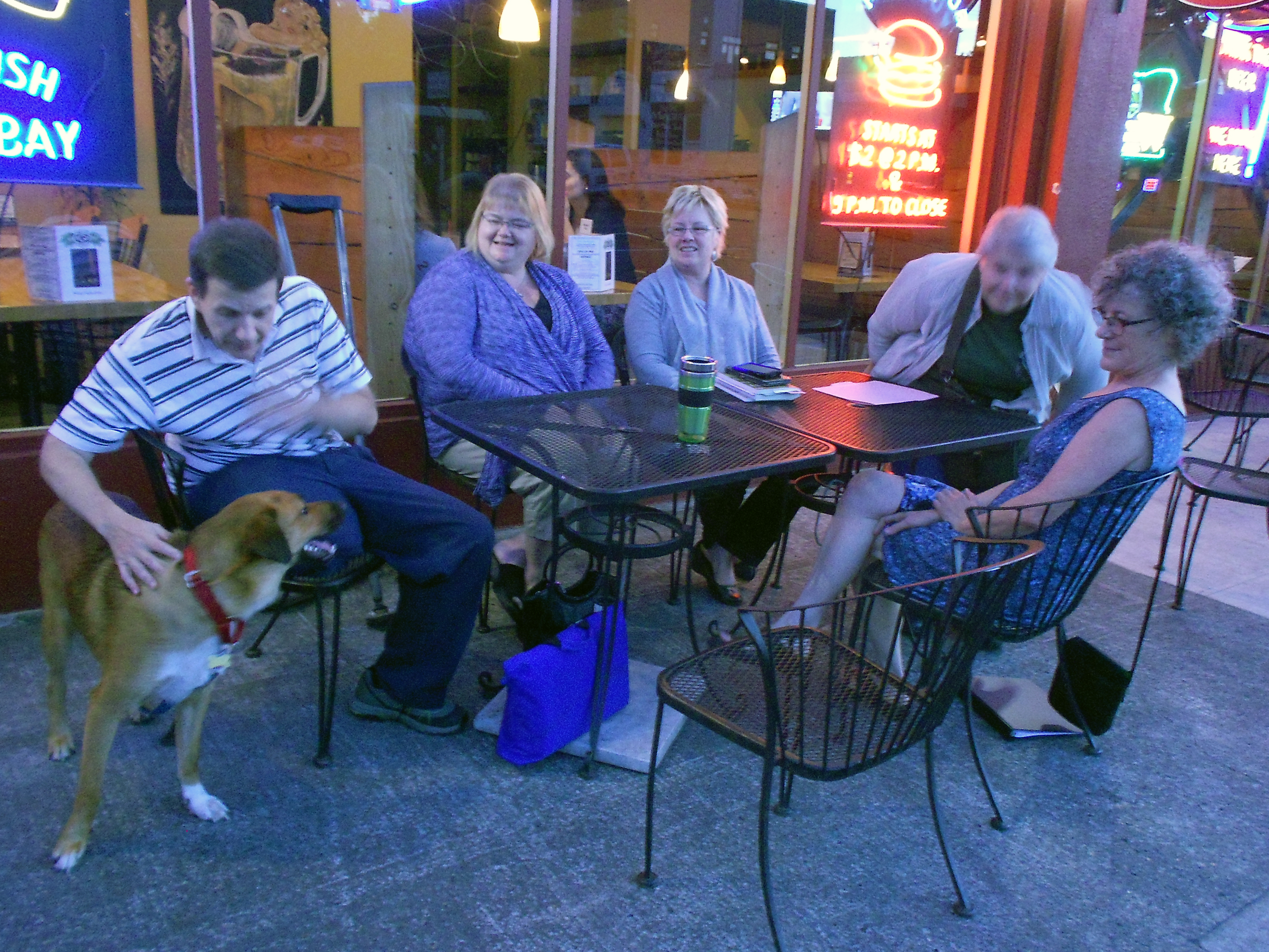
Last week I was invited to discuss writing with members of the Maya Angelou Writers’ Guild. The Portland group has been meeting for 17 years! It all started when some of the original members attended a reception for Maya Angelou in Portland, Oregon. Angelou, perhaps most famous for her memoir “I Know Why the Caged Bird Sings,” suggested that the Portland writers start a writing group, which they did. I enjoyed meeting with them and finding out about their writing projects. Here’s to another 17 years!

Photo credit: Poetry Foundation
On February 15, 2015, two of my writing students — Mark Robben and Kathy Eaton — and I took part in a panel discussion hosted by Writers’ Mill, a Portland writing group. Mark, Kathy and I talked about how we, along with several other Kickstart Your Writing students, self-published three anthologies in three years. The anthologies — Journeys to the Edge, Who’s Your Family? and Why in the Road — are available at lulu.com.
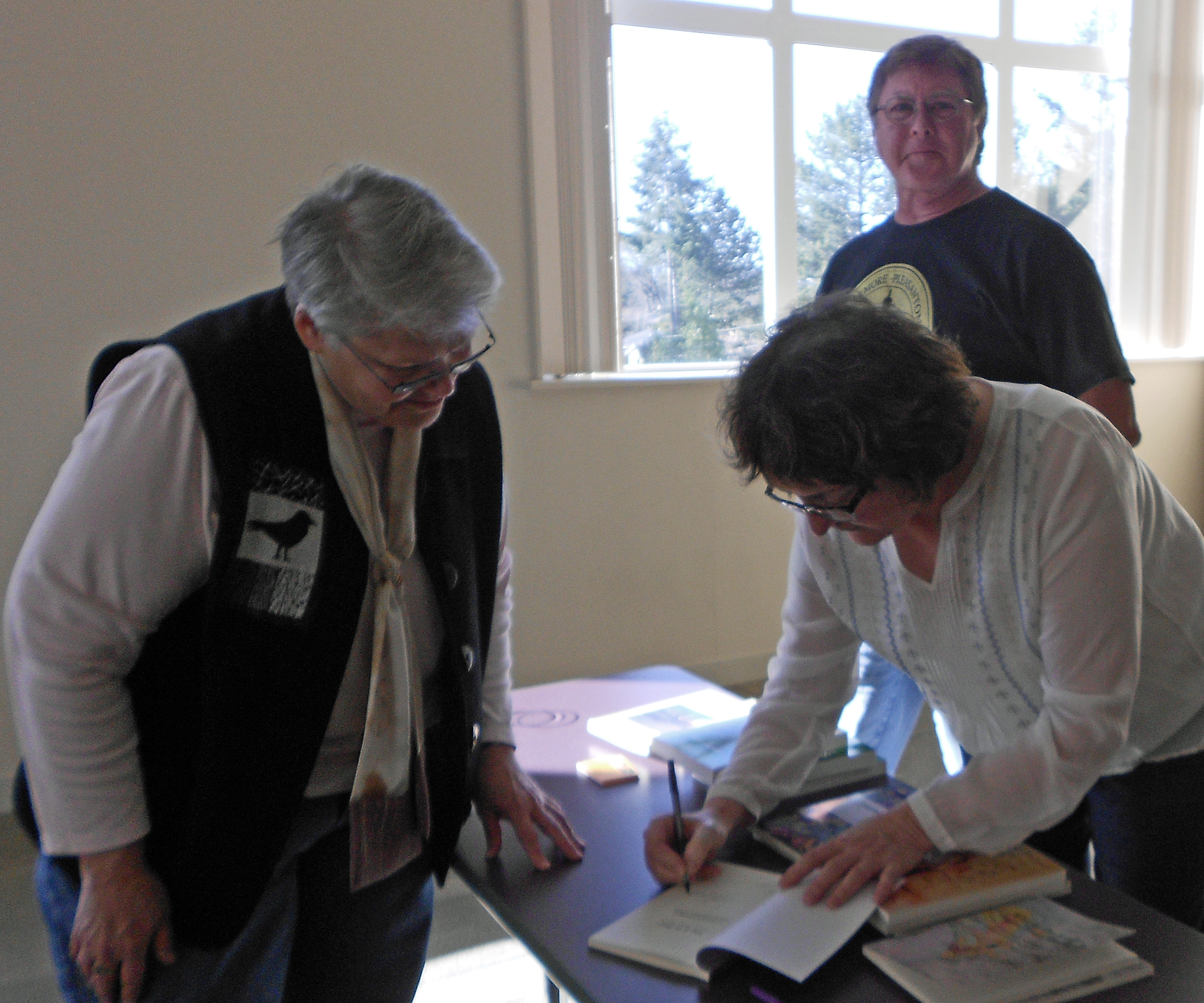

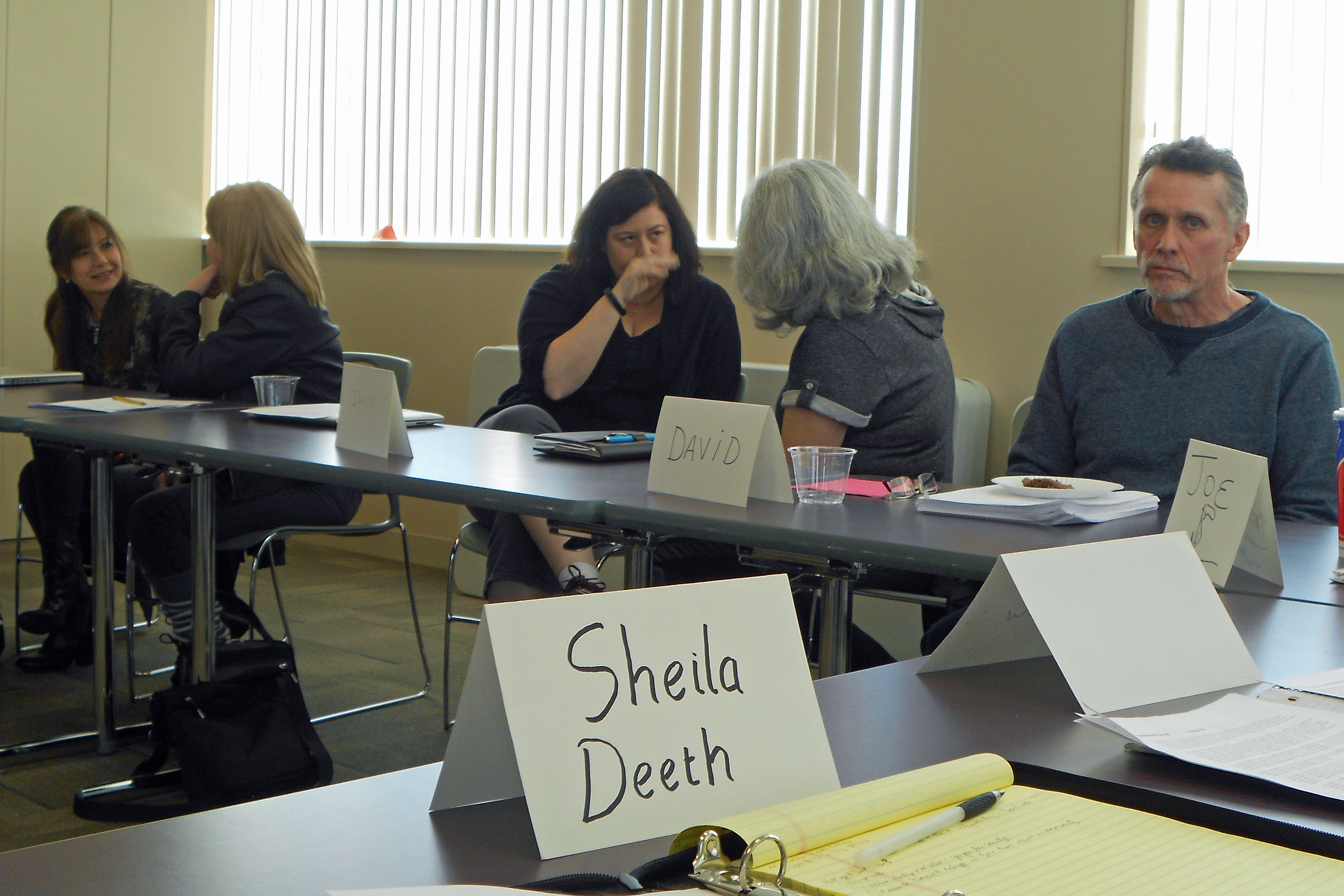
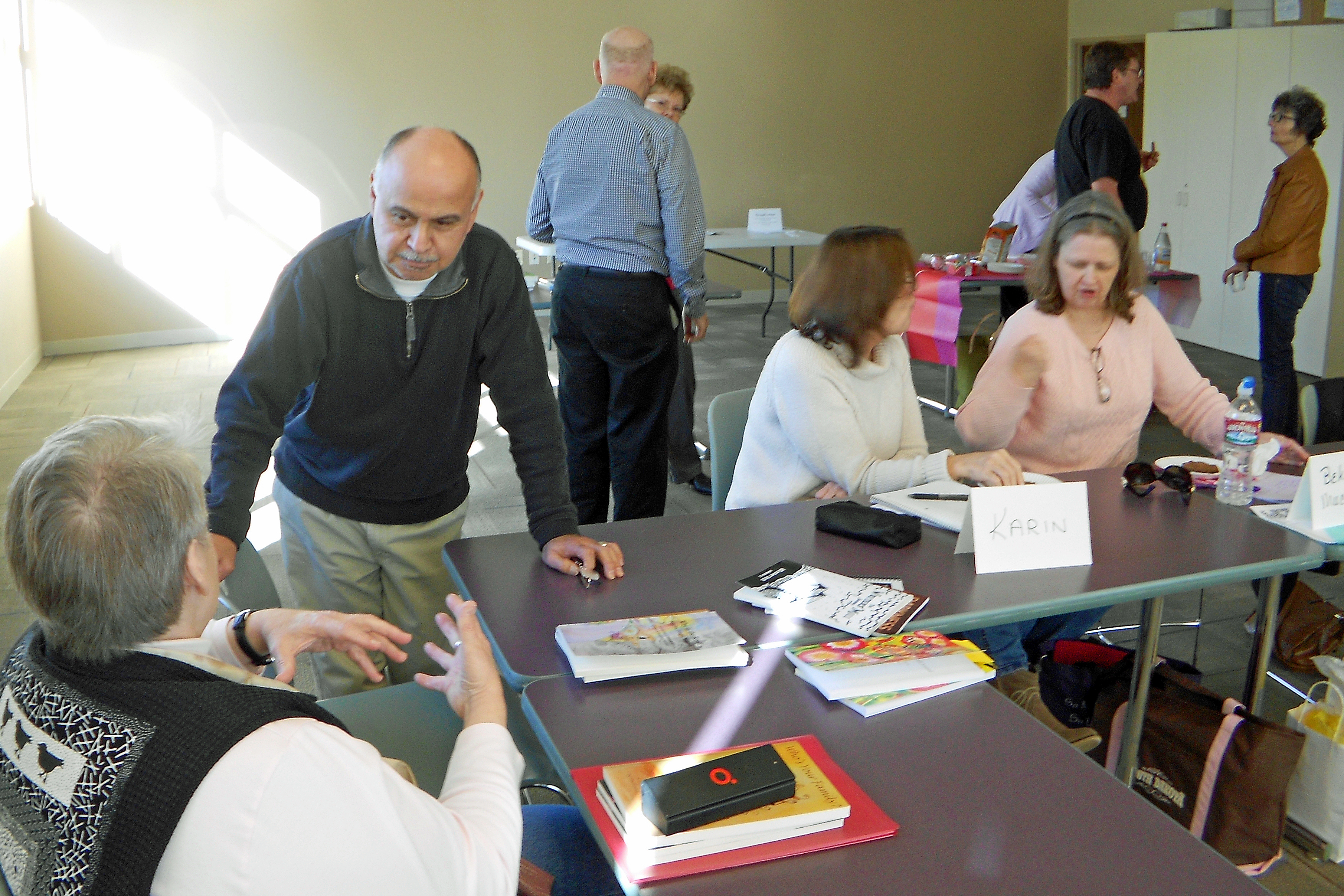
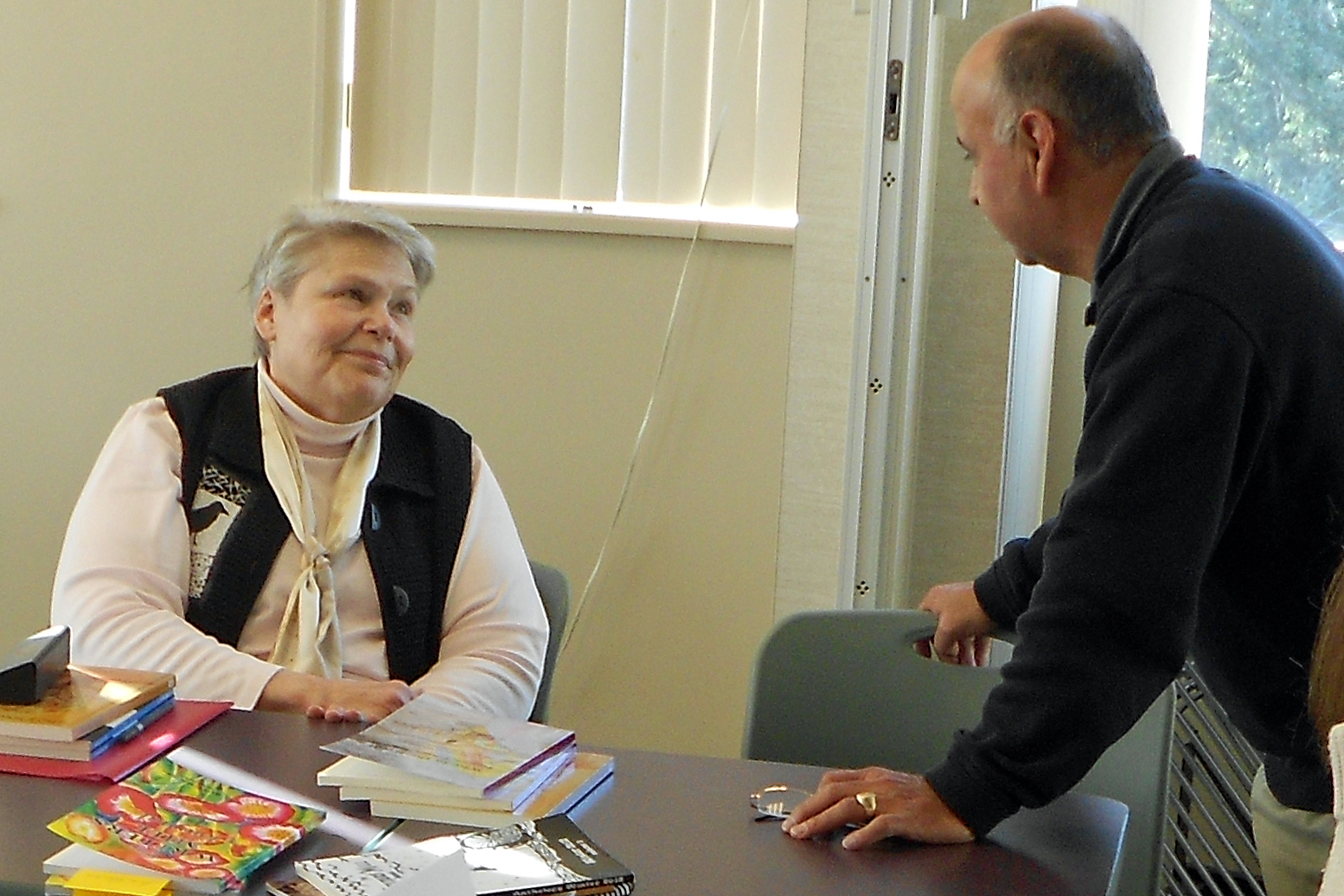
Here are some photos from my Nov. 18 reading at Broadway Books.
It was a fun night. Thanks to everyone who came and to Broadway Books for hosting the event. Under the Influence of Tall Trees: Humorous Tales from a Pacific Northwest Writer, is available at Broadway Books (www.broadwaybooks.net). Photos by Mark Robben.
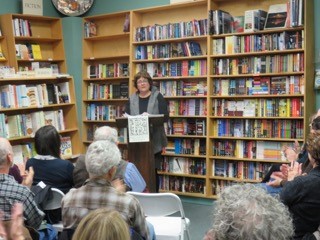


I’ll be reading from my recently released book, Under the Influence of Tall Trees, on Tuesday, November 18, 7 p.m., at Broadway Books, 1714 N.E. Broadway, Portland, Oregon, For more information: www.broadwaybooks.net.
Under the Influence of Tall Trees: Humorous Tales from a Pacific Northwest Writer, is a collection of quirky personal essays on the challenges of finding my true work, family and home in the Pacific Northwest
Sometimes tender, sometimes cranky, Under the Influence of Tall Trees presents my take on everything from the miracle of birth to my failure as a gardener. Along the way, I reveal myself as a bit of a curmudgeon.
As I say in the book, “I enjoy being funny. It just feels so good to let it all out—like a sneeze, only less wet.”
Whether arguing with The Other Phone Company, seeking out the perfect dancing dress for my young daughter (it’s “one-quarter Cinderella and three-quarters Mardi Gras”), or collecting yet another rejection slip as I start my freelance writing career, I use humor to describe the longings and labors of someone more than a little out of step with the rest of the world. When it all becomes too much, I retreat to the beauty of the Columbia River Gorge or duck into an antique shop, for relief from “life’s trendy newness.”
I also take up spinning, become an oyster chef groupie and visit Fort Clatsop to uncover the real cause of Lewis and Clark’s problems (“too much communal living combined with dense undergrowth”).
Original photographs, line drawings and cartoons round out Under the Influence of Tall Trees.
For additional information about Under the Influence of Tall Trees, contact me by email at wordpics@aracnet.com or via my website, www.nancy-woods.com. Copies of Under the Influence of Tall Trees: Humorous Tales from a Pacific Northwest Writer (ISBN 978–1-312–25642–2) are available in paperback at Broadway Books and lulu.com for $19.99.
On Tuesday, August 19, 2014, several Kickstart Your Writing students read from their anthology Why in the Road: Forgive, Forget, Regrets (available at lulu.com). The reading took place at Broadway Books in Portland, Oregon.

Catherine Magdalena

Kathy Eaton
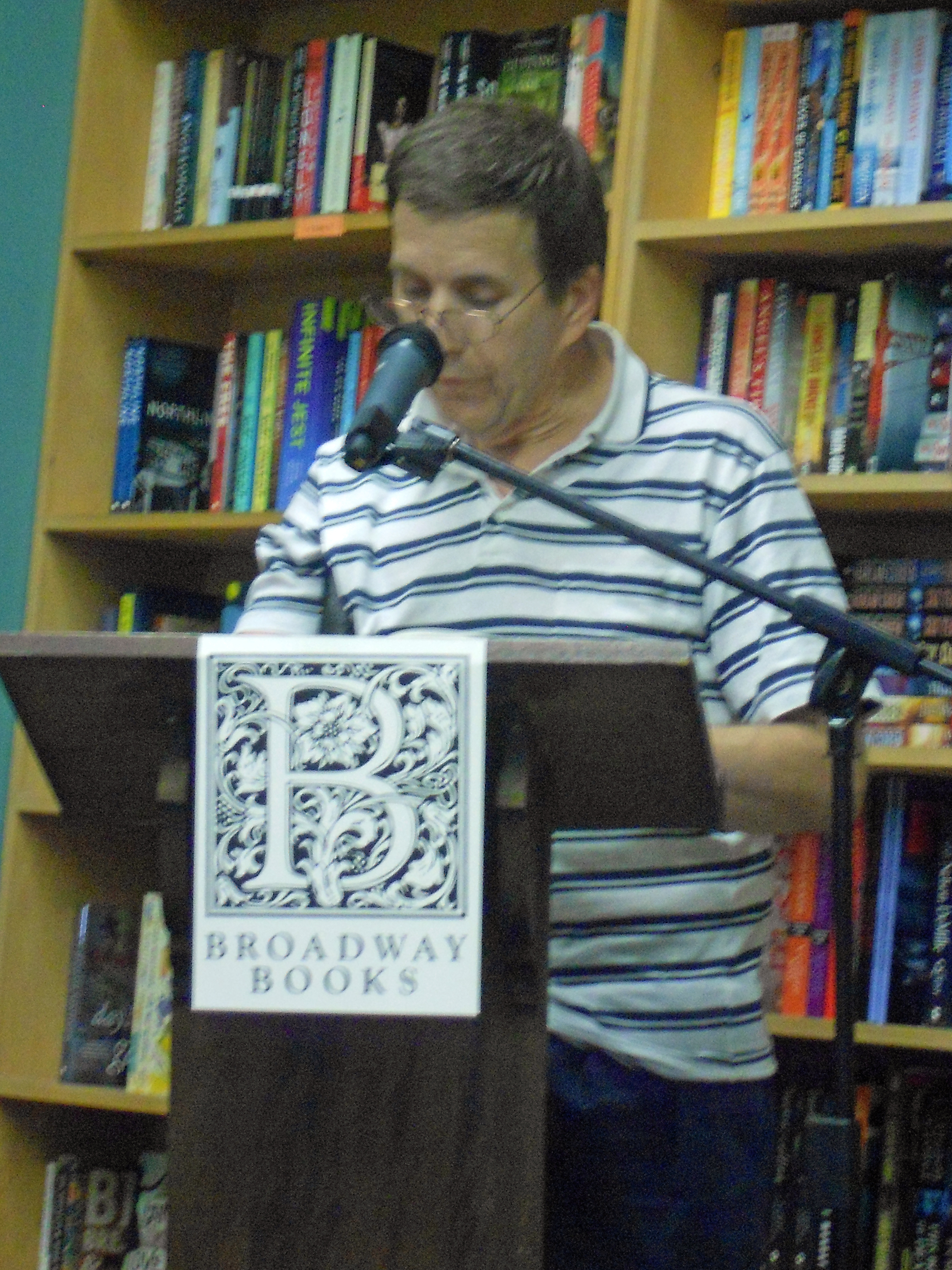
Dave King

Kerry McPherson
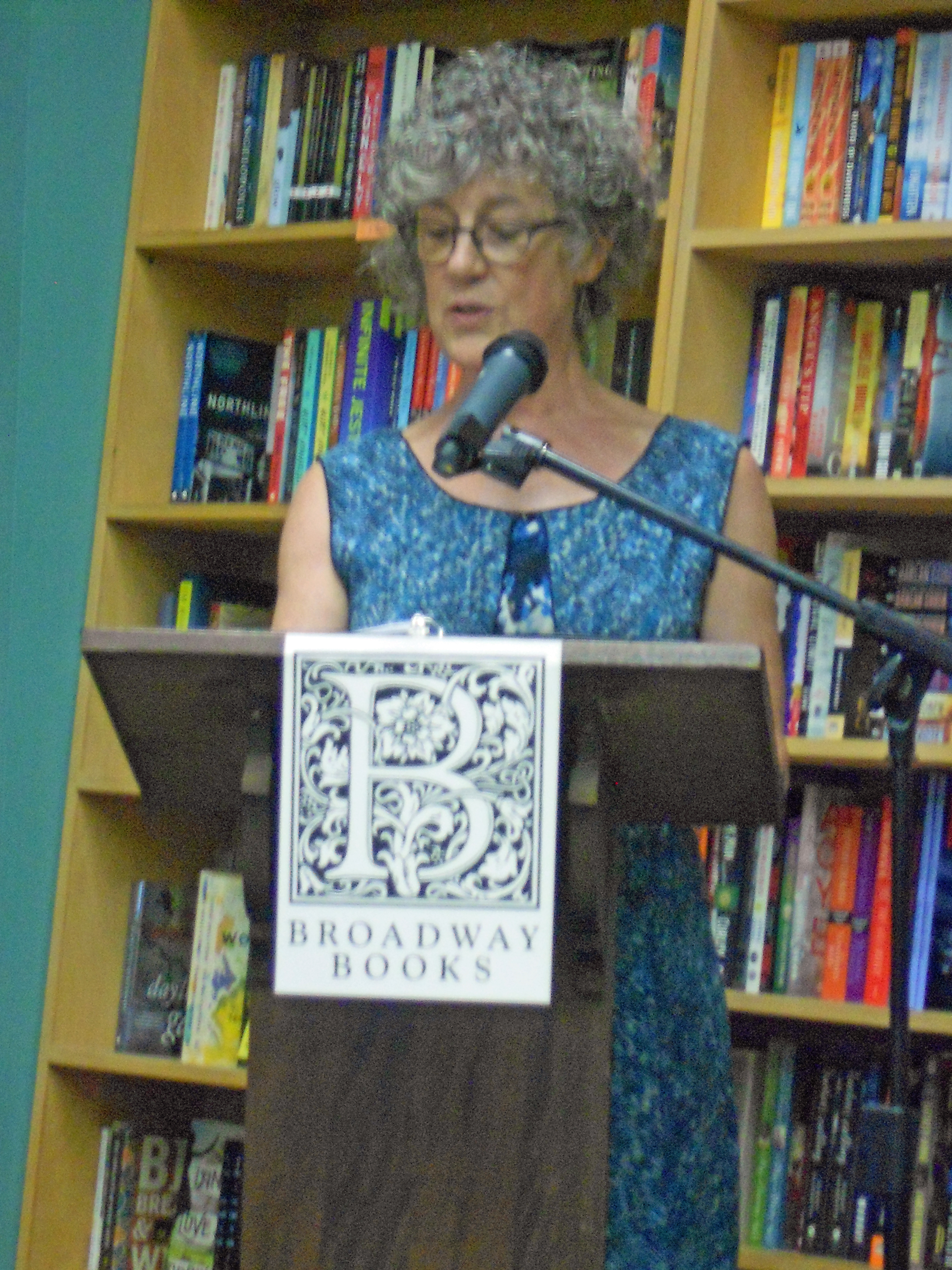
Shirley Lewton
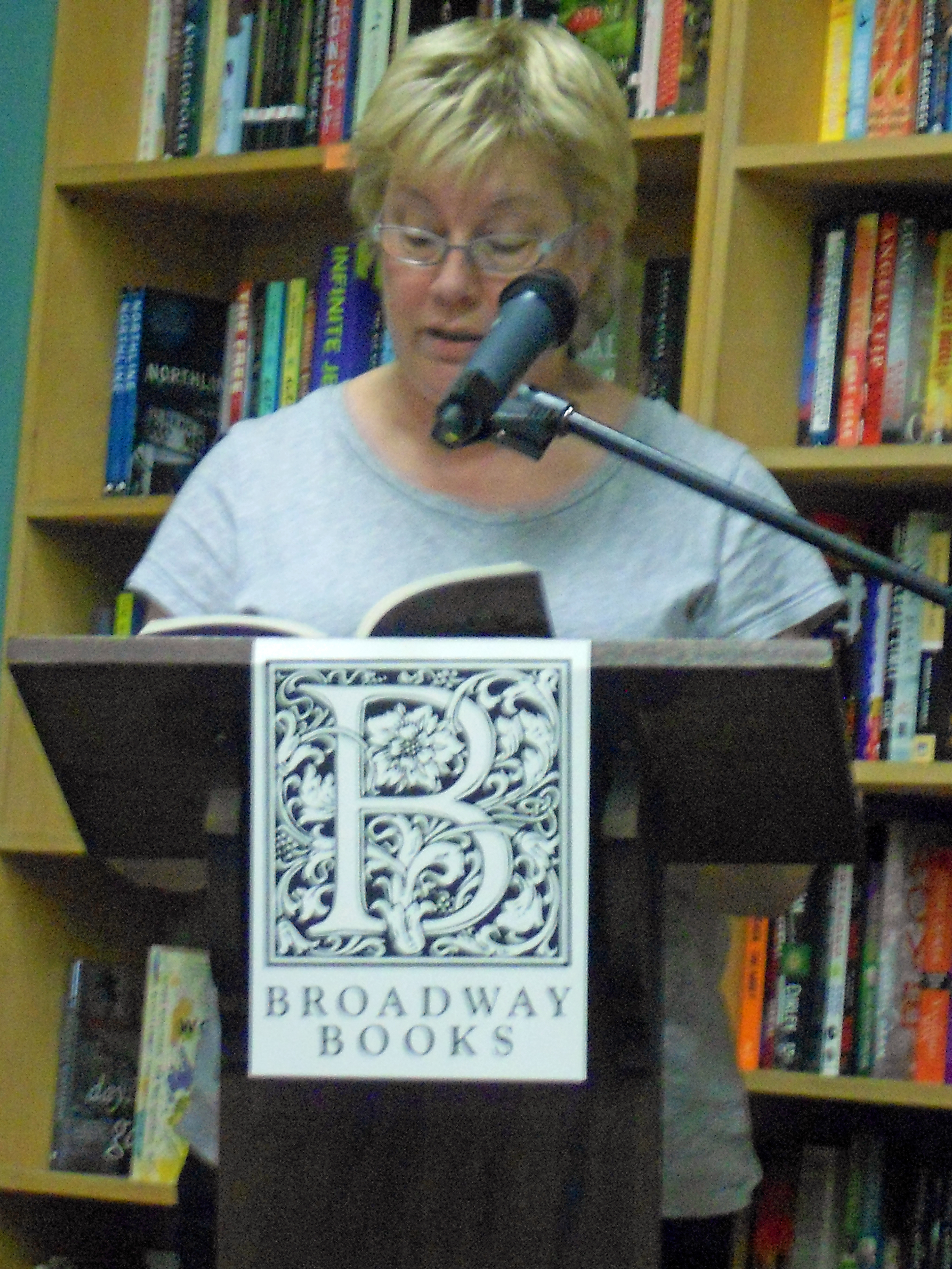
Susan MacMillan
After the reading

More after-the-reading revelry
By Kathy Eaton
On Tuesday, June 3, 2014, Portland author Jessica P. Morrell spoke at the Willamette Writers meeting about “Risky Business: How to create compelling, larger-than-life surrogate warriors, bad ass anti-heroes, believable antagonists and quirky, memorable cast members for your story.”
“Writers need to up their game with stories that are clear and come to life. Good characters haunt us and won’t let go,” said Morrell.
She advised writers to take more risks in writing fictional characters as they are the lifeblood of storytelling. Morrell said characters need trouble to come to life and create reader empathy. She gave these traits to characters: they are vulnerable, complicated and multi-faceted. All major characters have an agenda: the protagonist or villain’s single most important job is to stimulate reader’s emotions. “Characters don’t have to be nice; they just have to be fascinating,” Morrell said.
Morrell provided her recipe for characters with ingredients that work in any format:
According to Morrell, the more you know about your character and the story’s ending, the easier and faster it becomes to write it.
Morrell used popular movies such as Rain Main to illustrate her point about how a main character evolves over a powerful story arc in a positive way compared to The Girl with a Dragon Tattoo, which portrays a bad ass anti-hero whose primary character traits don’t alter.
She advised writers to send their characters into new physical and emotional territory. “Make it harrowing,” Morrell said. Keep up the tension as your antihero goes through twists and reversals.
In a hand-out she provided, Morrell lists traits of anti-heroes as:
Morrell has published six books and has two more coming out in fall 2014. For more information: jessicamorrell.com.
Kathy Eaton is a writer whose work has been published in The Oregonian, The Hollywood Star News, The Bee, Oregon Humane Society Magazine, Northwest Passage Magazine and Working Border Collie Magazine.
 Nancy Woods