Writing process: Act two

A writing tip from Ken Atchity’s “Musings of a Story Merchant” blog:

“Act 2 is the Sahara Desert of writing a novel or screenplay, and it’s much more than merely the bridge between Acts 1 and 3. One way to deal with it effectively is to divide Act 2 itself into three acts—and, while you’re at it, divide each of those into three mini-acts. The division by three is powerful even down to the page, paragraph, and sentence level. It keeps the reader involved all the time! ”


Writing prompt: Independence Day

Independence Day took place two days ago. The Fourth of July, as it is also called, commemorates the year the United States declared its independence from Great Britain. When did you declare your independence? What were you declaring independence from? Your parents? An unhealthy habit? A troubling past?

Spend five minutes writing about that.

Where do you write?

This is where I write. -- Photo by Nancy Woods


Some writers enjoy writing in busy coffee shops. Others work at a kitchen table or in a spare bedroom. I write in an office near my home.  The space works for me because it’s orderly without being fussy and functional without being too formal. 
 
Is your work space serving you well? If not, how could you improve it? If you’re not producing as much writing as you would like, take a look at your writing space. Changing it, can make a big difference. 

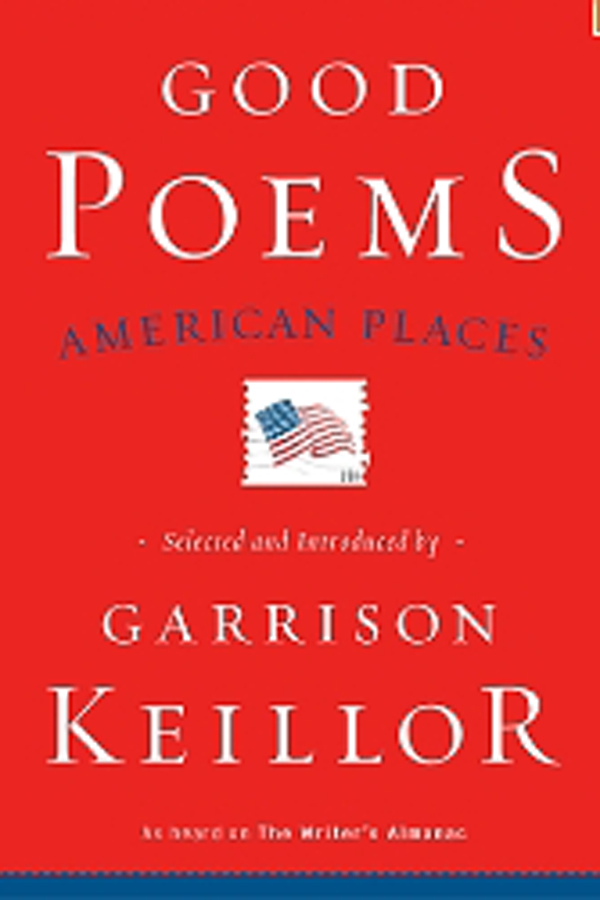
What I’m reading: Good Poems: American Places

Good Poems: American Places - Selected and Introduced by Garrison Keillor


How can you not like a book of poetry that includes “Ode to Hardware Stores” by Barbara Hamby; “John Green Takes His Warner, New Hampshire, Neighbor to a Red Sox Game” by Maxine Kumin; and “Bronco Busting, Event #1” by May Swenson?

There’s something so down-to-earth about Good Poems: American Places, a poetry-doesn’t-have-to-be-a-big-deal compilation. No surprise that it’s edited by Garrison Keillor, an American storyteller known for honoring America and its inhabitants.

A tidbit from the collection: 

The Junior High School Band Concert

By David Wagoner 

When our semi-conductor
Raised his baton, we sat there
Gaping at Marche Militaire,
Our mouth-opening number.
It seemed faintly familiar
(We’d rehearsed it all that winter),
But we attacked in such a blur,
No army anywhere
On its stomach or all fours
Could have squeezed through our crossfire.

I played cornet, seventh chair,
Out of seven, my embouchure
A glorified Bronx cheer
Through that three-keyed keyhole stopper
And neighborhood window-slammer
Where mildew fought for air
At every exhausted corner,
My fingering still unsure
After scaling it for a year
Except on the spit-valve lever.

Each straight-faced mother and father
Retested his moral fiber
Against our traps and slurs
And the inadvertent whickers
Paradiddled by our snares,
And when the brass bulled forth
A blare fit to horn over
Jericho two bars sooner
Than Joshua’s harsh measures,
They still had the nerve to stare.

By the last lost chord, our director
Looked older and soberer.
No doubt, in his mind’s ear
Some band somewhere
In some music of some Sphere
Was striking a note as pure
As the wishes of Franz Schubert,
But meanwhile here we were:
A lesson in everything minor,
Decomposing our first composer.

Writing prompt: Clever trickery and deceit

It’s Wednesday, which means…it’s Writing Prompt Day! There’s nothing that jumpstarts a writer faster than responding to a writing prompt. Why? Because the prompt takes one of the challenges of writing — coming up with a topic — and does it for you, so you can focus on what you really want to do — write.

Just read the prompt below and then spend 5-10 minutes writing about it. That’s it. Sounds simple, but it works.

Chicanery: n. 1. The use of clever but tricky talk or action to deceive, evade, etc., as in legal dealings. 2. An instance of this. Synonym: See deception. — Webster’s New World Dictionary

Show a man using a bit of chicanery to get his inattentive wife to pay attention to him, even if she’s just complaining or reporting a problem. Maybe he hides her car keys so she can’t leave for work in the morning and comes to him all frazzled. Maybe he throws away all the salt in the kitchen, even when she buys more, so she starts to think she’s going crazy.

By “show” I mean instead of this:

The man kept hiding his wife’s car keys just to see her get flustered.

Do this:

The minute his wife’s back was turned, Jeffrey grabbed her car keys off the counter and stuck them in his pocket….

The magic of music

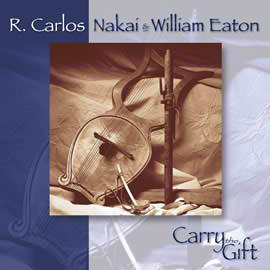
Carry the Gift by R. Carlos Nakai and William Eaton


I’m listening to Carry the Gift,” a CD featuring music by Native American flutist R. Carlos Nakai with William Eaton on guitar, harp guitar and lyre. Nakai, of Navajo-Ute heritage, originally was trained in classical trumpet and music theory. Later, when he was given a traditional cedar wood flute as a gift, he decided to find out what he could do with it.

His music evokes feelings of relaxation and openess, as if he were saying “Everything is okay. Relax.” The names of the songs − “On Painted Wing,” “Feather River Lullaby,” “Unsung Myths,” “Old Voices Heard” and “Sandy Hills Speak,” − sound like musical essays.

iCloud: Digital wave of the future?

Non-digital cloud. -- Photo by Nancy Woods


In her Technorati article “How iCloud will Change the Process of Writing,” Maria-Louise Overgaard says she’s looking forward to being able to save her writing in iCloud because it will mean she no longer has to e-mail copies of her writing to herself to make sure she has access to it from whatever device she’s working on.

What is iCloud? According to SearchCloudComputing.com, it’s a computer service that provides online storage and applications, with the following advantages:

  • Easy and inexpensive set-up because hardware, application and bandwidth costs are covered by the provider.
  • Scalability to meet needs.
  • No wasted resources because you pay for what you use.

That kind of computer storage sure sounds handy, but what about security? Can iCloud files be hacked? And, if I understand it correctly, iCloud isn’t going to work when I’m working away from my office in a location that doesn’t have Internet access. Which means, for now at least, I’m sticking with my portable hard drive.

Young-adult fiction too dark?

Illustration by Raul Allen


In her recent Wall Street Journal article “Darkness Too Visible,” Meghan Cox Gurdon criticizes today’s young-adult fiction, saying it’s become too dark, violent and graphic.

“How dark is contemporary fiction for teens?” Gurdon writes. “Darker than when you were a child, my dear: So dark that kidnapping and pederasty and incest and brutal beatings are now just part of the run of things in novels directed, broadly speaking, at children from the ages of 12 to 18.

“Pathologies that went undescribed in print 40 years ago, that were still only sparingly outlined a generation ago, are now spelled out in stomach-clenching detail. Profanity that would get a song or movie branded with a parental warning is, in young-adult novels, so commonplace that most reviewers do not even remark upon it.”

Gurdon’s essay has caused an online ruckus as people line up for and against what some readers have described as just one person’s opinion.

When my daughter was young, I didn’t censor what she read, but I didn’t buy her any books that might be described as “disturbing,” either. As a writer, I get nervous whenever I come across something that hints at censorship, but I understand wanting to protect a child’s innocence. After all, how long does it last?

Whatever you think, Gurdon’s essay raises several important questions:

Is there a difference between censorship and parental judgment? What is the purpose of young-adult fiction? To reflect life in all its beauty and tragedy? To entertain? Shock? Uplift? Inform? To raise difficult issues? To make sure even the most unhappy teens realize they aren’t alone? Should teens be exposed to only those books they’re mature enough to handle? If so, who gets to decide what that means?

Writing prompt: Get trashy

Okay, we both know you’re a classy writer who only writes stories about saving the earth, improving the economy and lowering one’s cholesterol  — but where’s the fun in that?

Lighten up, Ms. Responsible. Let loose, Mr. Uptight. It’s time to have some fun with your writing, like Perez Hilton does.

Hilton’s website (“Celebrity Juice. Not From Concentrate.”) features everything from snarky movie reviews to photos of celeb cleavage and announcements of celeb breakups.

One of Hilton’s recent articles, “St. Jolie Visits Syrian Refugees,” is part news, part fun:

Angelina Jolie in Turkey -- Photo via Abaca USA


“Just another day in the life of Saint Jolie!” the article reads. “Yes, Mz. Angelina Jolie visited the Turkey and Syrian border this week to meet with Syrian refugees as part of her duties as an ambassador for the United Nations High Commissioner for Refugees. During her visit, Angie will meet with some of the 9,600 people who have fled the violent protests occurring in Syria.

“Just before she arrived, Turkish authorities held a banner that read: ‘Goodness Angel of the World, Welcome.’ As always, it’s so wonderful to see her continue to use her fame to cause awareness around the world. So inspiring.”

What does this mean to you, a writer?

Well, for one thing, Hilton would make an interesting character in a story. According to his online bio, Hilton is:

  •  A Cubano and Miami native
  • The Internet’s most notorious gossip columnist
  • A Hollywood resident where he lives with his precious mini-Goldendoodle Teddy Hilton
  • One sweet yet snarky, sagacious yet salacious gay man
  • One of the 15 most influential Hispanics in the United States

Writing prompt:

Write a one-page scene showing a Hollywood gossip columnist interviewing a movie actor in the actor’s home. Write one version from the point of view of the columnist. Write a second version from the point of view of the actor.

Now wasn’t that fun?