The 2011 Pen Literary Award winners have been announced. The awards honor fiction, nonfiction, essays, science writing, sports writing, poetry, biography, and translations, in addition to other categories. I printed the list out. Lots of good reading ahead.
Category: The Blog
Writing prompt: Description
Describe your bedroom. Describe everything in it — the furnishings, walls and windows, etc. Convey the overlook appearance of the room. Is it messy or neat? Sterile, erotic or romantic? Imagine someone walking into the room for the first time. Use that person’s point of view to describe the room.
What I’m (almost) reading: Hunger of Memory: The Education of Richard Rodriguez
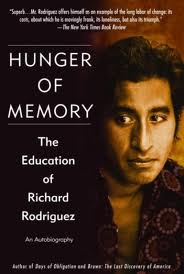
I just found out about the University of Alaska Anchorage’s (UAA) Northern Renaissance Arts & Sciences Reading Series. The literary event, sponsored by UAA’s Department of Creative Writing and Literary Arts, runs July 10-19 in Anchorage. Keynote speaker Richard Rodriguez, is the author of Hunger of Memory: The Education of Richard Rodriguez; Days of Obligation: An Argument with my Mexican Father; and Brown: The Last Discovery of America, nominated for the National Book Critics Award.
Hunger of Memory is a memoir about childhood, assimilation and the importance of language. An excerpt:
“…the country of my childhood lives within me with a primacy that is a form of love….It has fed me language, perceptions, sounds, the human kind. It has given me the colors and the furrows of reality, my first loves. The absoluteness of those loves can never be recaptured: no geometry of the landscape, no haze in the air, will live in us as intensely as the landscapes that we saw as the first, and to which we gave ourselves wholly, without reservations.”
I’ve put the book on hold at my library, am looking forward to reading it.
Kickstart students kickstart second anthology
Last Friday, several Kickstart Your Writing students met to discuss their upcoming anthology. The part-planning, part-social event was held at the home of Kathy Eaton. Other participants included Kathy Lillis, Jamie Caulley, Sarah Retzer, Michael Cannarella, Catherine Magdalena and June Selis.
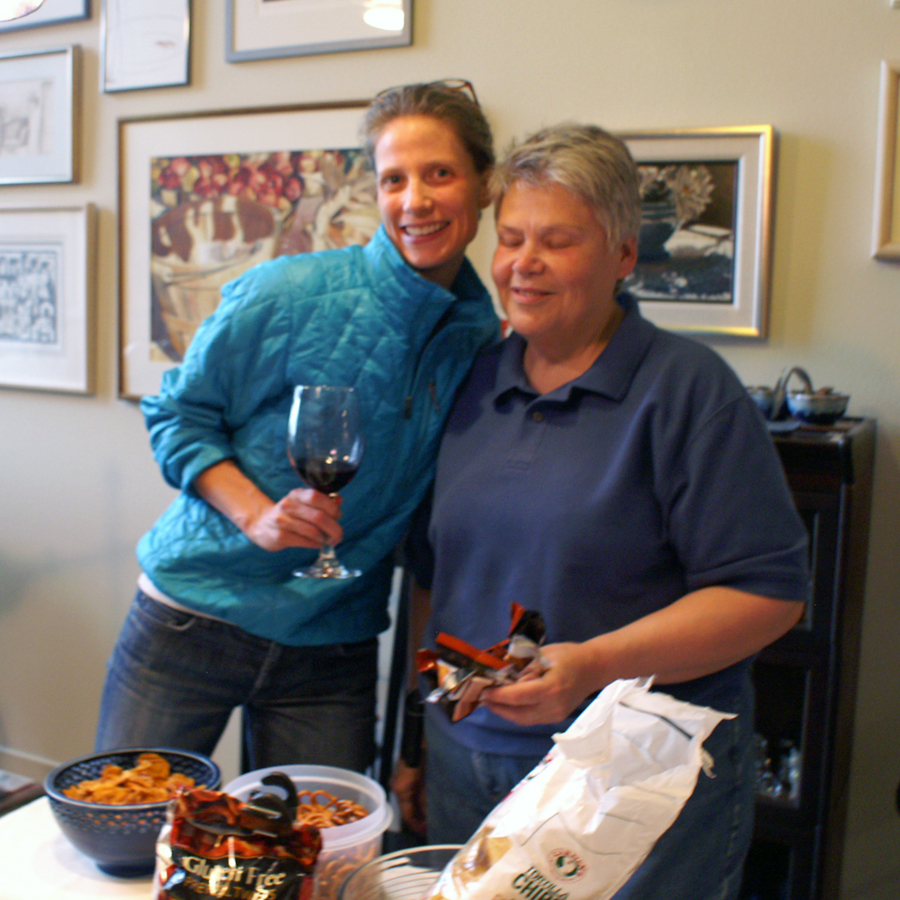
Jamie Caulley and Kathy Eaton

Catherine Magdalena and June Selis
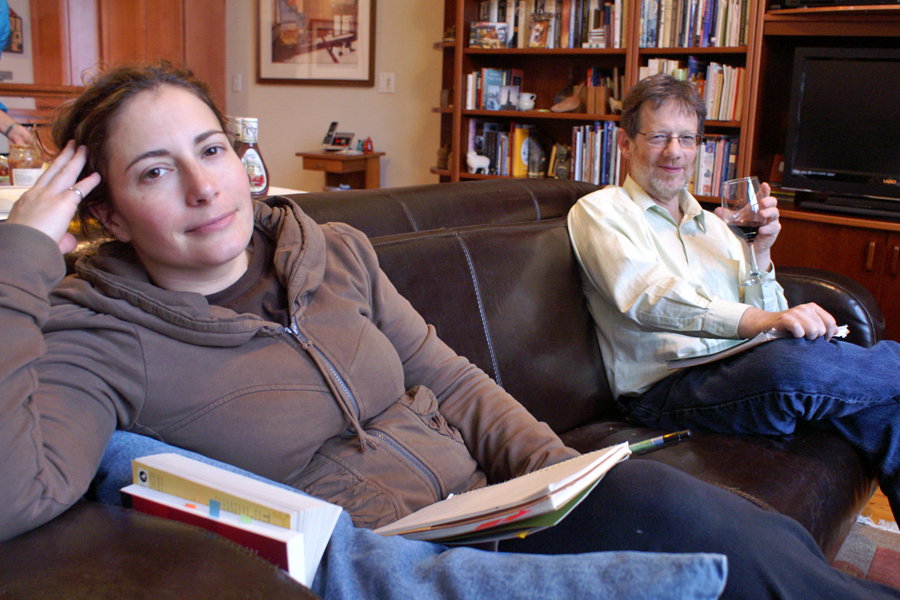
Sarah Retzer and Michael Cannarella
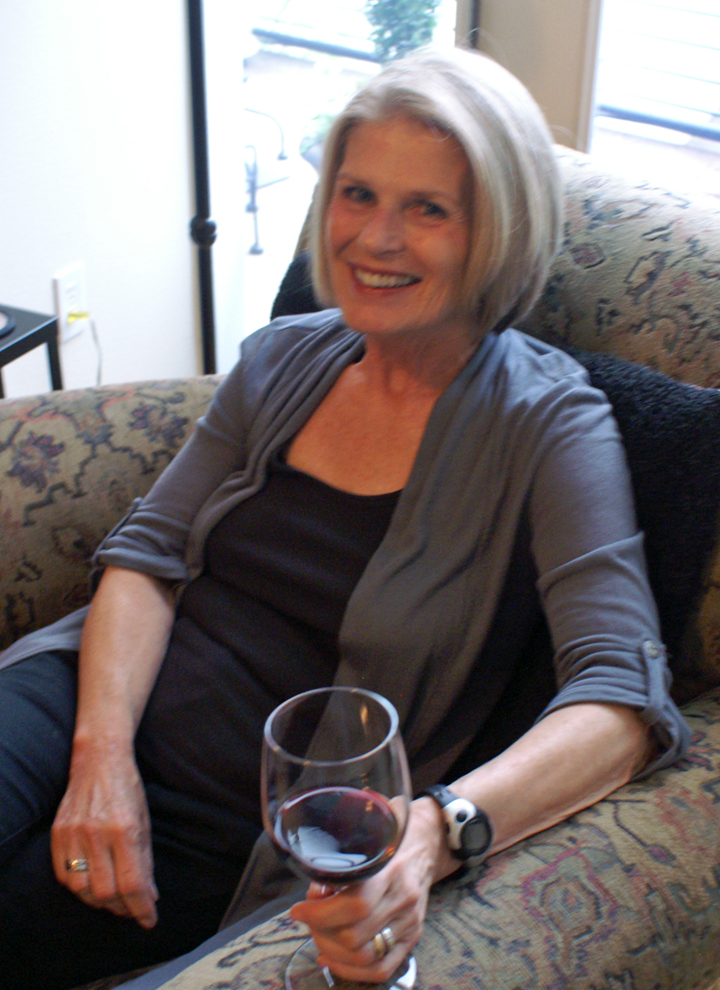
Kathy Lillis
Yet to be titled, the collection of writing will be the second anthology produced by Kickstart students. The first Kickstart anthology, titled Journeys to the Edge, includes stories about everything from a wacky, drug-induced break-in to a funny medical mission to El Salvador.

The Friday social event included a lively discussion about possible themes as well as food and drink, including a bottle of red wine aptly called Subplot.

The tentative release date for the new anthology is early 2012. Stay tuned.
Writing contest: 5th Wordstock Short Fiction Competition
Wordstock, an annual writing festival held in Portland, Oregon, is accepting submissions for its 5th Wordstock Short Fiction Competition. This national contest is a blind competition. The winner of the competition receives a first prize of $1,000 and publication in the October 2011 issue of Portland Monthly magazine. All 10 finalists’ stories will be published in the Wordstock Ten, an anthology that will be available at the festival, at Portland-area bookstores, and online through the Wordstock website. Every writer who enters the competition will receive a copy of the anthology.
The final judge for this year’s competition is novelist Aimee Bender.

Aimee Bender
Bender is the author of four books: The Girl in the Flammable Skirt (1998) which was a NY Times Notable Book, An Invisible Sign of My Own (2000) which was an L.A. Times pick of the year, Willful Creatures (2005) which was nominated by The Believer as one of the best books of the year, and The Particular Sadness of Lemon Cake (2010) which recently won the SCIBA award for best fiction, and an Alex Award. Her short fiction has been published in Granta, GQ, Harper’s, Tin House, McSweeney’s, The Paris Review, and many more places, as well as heard on PRI’s This American Life and Selected Shorts. Her fiction has been translated into sixteen languages. She lives in Los Angeles, where she teaches creative writing at USC.
The fee to enter the contest is $20. This year, for the first time, submissions can only be made online. Any proceeds from the competition go to support Wordstock’s education programs for teachers and students. The deadline for entering the 2011 competition is July 15.
The fee to enter the contest is $20. This year, for the first time, submissions can only be made online. Any proceeds from the competition go to support Wordstock’s education programs for teachers and students. The deadline for entering the 2011 competition is July 15.
Complete submission guidelines are available at http://wordstockfestival.com/get-involved/short-fiction-competition
Kickstart students write anthology, plan Nov. 3 reading
Seven Kickstart Your Writing students have written an anthology called Journeys to the Edge. The diverse collection of humorous, emotional and thought-provoking essays includes:
- A funny story about a drug-induced home break-in
- An emotional description of having an abortion
- A Peace Corps memoir about living with Fijians known for their history of cannibalism.
All the writers chose to write about a personal journey that took them to the edge of their world, whether literally or figuratively, physically or emotionally. The writers — Jamie Caulley, Kathy Eaton, Jen Laverdure, Susan MacMillan, Mark Robben, Sarah Retzer and June Selis — will read from the collection on Wednesday, November 3, 7 p.m. at St. Johns Booksellers, 8622 N. Lombard St., Portland, Oregon. After the reading, the writers will be available to answer questions.
Word for the day: tent pole writing
(Well, okay, “words” for the day.)
A friend of mine, while researching the upcoming Willamette Writers Conference taking place August 6-8, 2010 in Portland, Oregon, found out that several agents who will be at the conference are looking for “tent pole writing.” What’s that, you ask?
tent pole:
n. something, such as a commercial undertaking, a story franchise, or a fictional character, that serves as primary support (for a company, television program, etc.), especially a blockbuster movie that compensates for a studio’s flops.
Citations: 1986 Gina Mallet Globe and Mail (Toronto, Can.) (Mar. 27) “As Stratford’s World Turns” p. P58: As the only major industry in town, it is the tent pole of Stratford’s economy. 1987 Aljean Harmetz @ Hollywood (June 4) “Figuring Out The Fates of ‘Cop II’ and ‘Ishtar’”: Mr. Mancuso describes “Beverly Hills Cop II” as a “tent pole” movie. Each year Paramount makes several high-budget films “that because of content, star value or storyline have immediate want-to-see and are strong enough to support your entire schedule,” he said. “Ishtar” had none of the strengths of a tent pole. 2003 Hilary Kramer New York Post (Aug. 10) “H’Wood Mulls Big-Flick Costs”: It’s easy to see how big movies—called “tent poles” in industry parlance—can be big risks. “You can’t afford too many tent poles in a year,” said Jeff Sine, the global head of media at UBS Warburg. 2004 Jennie Punter Globe and Mail (Toronto, Can.) (May 31) “Studios scurry to make movies with international legs” p. R1: The industry term for a movie (usually but not always a franchise flick) that a major studio expects will be a blockbuster (but often isn’t), “tent pole” is a particularly evocative buzzword to toss around these days, especially for those brushing up on ancient texts or history in preparation for a pitch meeting with a major studio. 2004 Jon Gertner New York Times (Nov. 14) “Box Office in a Box”: A studio like Fox usually works on dozens of DVD’s at a time—from minor television shows to $100 million-plus “tent poles” meant to draw everyone in and that entail a marketing blitz mapped out long beforehand. 2005 Patrick D. Healy New York Times (Feb. 24) “After Coming Out, a Soap Opera Heroine Moves On”: Megan McTavish, the show’s head writer, said she was most astonished that fans elevated Bianca into one of the serial’s “tent poles”—soap parlance for characters who hold enormous sway with viewers.
Free mini notebook
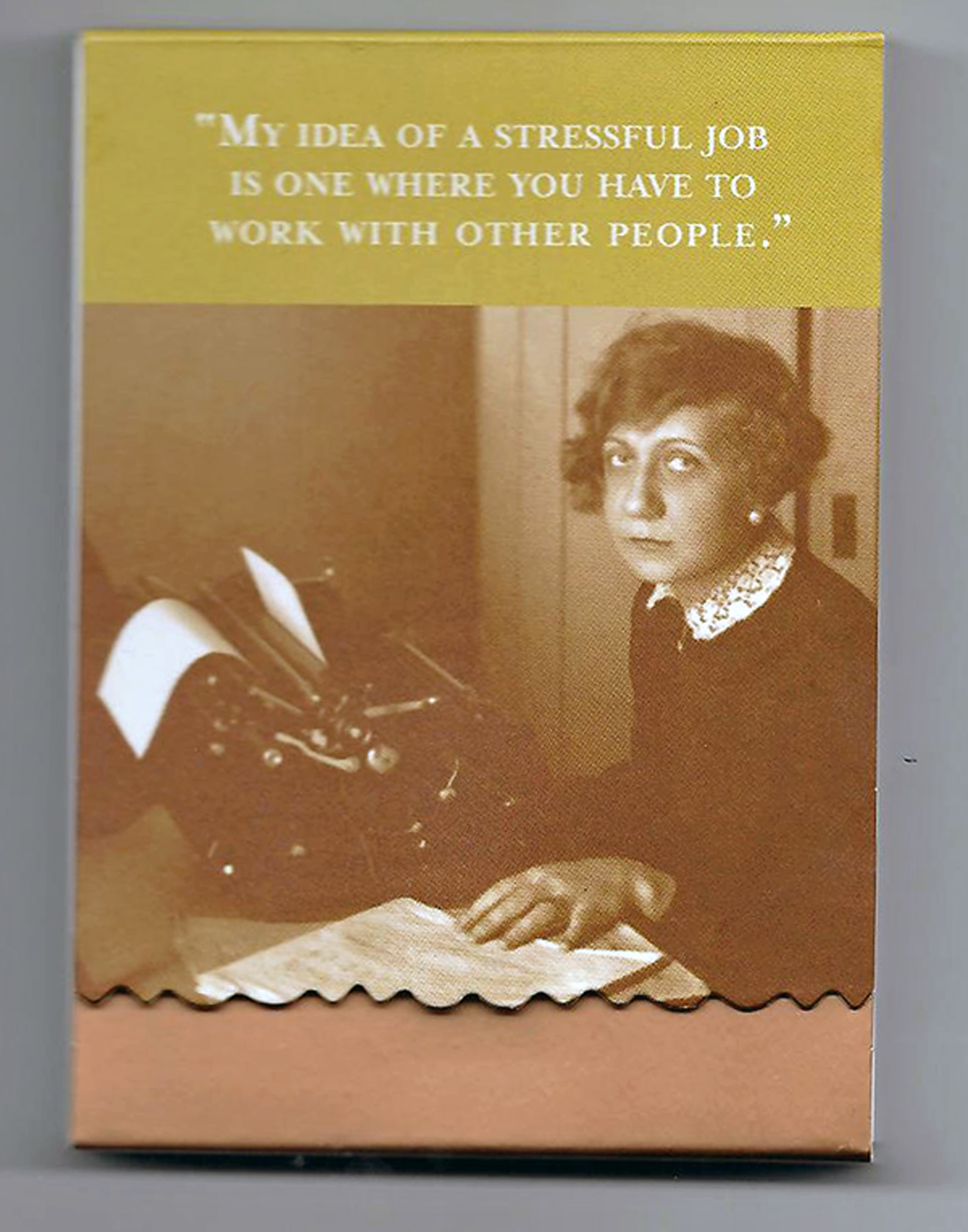
The first person to send me his/her regular mailing address will receive the fun, mini notebook pictured below. The saying at the top reads “My idea of a stressful job is one where you have to work with other people.” How writerly.
Why take a writing class?
It was a Saturday morning inside a 100-year-old school building in Hood River, Oregon. The first session of Jumpstart Your Writing was about to start.
“Why did you sign up for the class?” I asked the students.
“I want to love writing again and have my self-confidence back,” one woman said, before explaining how, when she was in grade school, a teacher told her that writing wasn’t going to be her thing. The teacher believed that if someone wasn’t good at something right away, it was best to try something else. “I felt like my hands had been burned,” the student said.
Another student said she got lots of ideas but didn’t know how to put them on paper. She also explained that she could be very critical of herself.
For still another student, it was “the pressure of deadlines and something specific to write” that she was looking forward to in class. Although she’d completed her degree in English ten years before, she said, “I haven’t written a lick since.”
There are a lot of reasons to take a writing class: To create a writing routine. To work on specific projects. To increase how much and how often you write. To discover what you were meant to write about. To spend time with people who value writing.
Do you think writing classes can be helpful? Why or why not?
Writing contest: Kay Snow
The deadline for the annual Kay Snow Writing Contest is April 23, 2010. Categories include: adult fiction; adult non-fiction; poetry; juvenile short story, novel excerpt or article; screenwriting and student writer. The contest is sponsored by Willamette Writers, which was founded by Kay Snow. For more information: http://www.willamettewriters.com/1/guidelines.php
 Nancy Woods