Favorite books, movies and ice cream

My favorite books are Shipping News by Annie Proulx, Fried Green Tomatoes at the Whistle Stop Café by Fannie Flagg,  and Lake Wobegon Days by Garrison Keillor. My favorite movies are It’s a Wonderful Life,
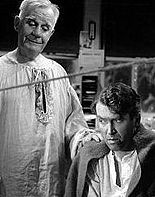
Henry Travers as Clarence Odbody (Angel Second Class) and James Stewart as George Bailey in It's a Wonderful Life.


Groundhog Day, 

Andie MacDowell and Bill Murray in Groundhog Day

and The Englishman Who Went Up a Hill and Came Down a Mountain.


Hugh Grant in The Man Who Went Up a Hill and Came Down a Mountain


My favorite TV shows are “Murder, She Wrote” and “Newhart.”  My favorite ice cream is vanilla with fresh raspberries on top.

So what, you say?

Well, our favorite books, movies and ice cream (well, maybe not ice cream) hint at what direction our writing could take.  As you can tell from my lists, I like funny stories about small towns and the quirky people who live in them. What are your favorite books and movies? What themes, genres and voices do they reveal? Have you ever written about those themes in those genres, using that voice? If not, why don’t you start?

Writing process: Four things that guarantee success


In his book A Writer’s Time: A Guide to the Creative Process, from Vision through Revision, literary agent/film producer Ken Atchity says a writer needs only four things to be successful:


  • Perseverance (or determination or stamina)
  • Connections
  • Being fun to work with
  • Talent


Do you have the above attributes? If not, how can you improve your situation?


Writing process: Write for the sake of writing

Maybe you’ve written things and submitted them only to have them rejected. Does that mean you should give up? Here’s what Richard Walter, author of Essentials of Screenwriting says:

…To attach particular expectations to any action is a formula for frustration. To attach to the writing of a screenplay the expectation that it will sell is a recipe for disappointment. Writers have to write solely for the sake of writing since, as argued repeatedly, it is a privilege even merely to be mistreated in Hollywood….

Inspiration: Soul mission

Your soul mission is your reason for being, your life purpose. It’s your calling in life–who you feel called to be, what you feel called to do. Mission is an energy that flows through you–a drive, voice, or passion that you cannot ignore… It’s what you know in your heart you must live if you are to experience inner peace and harmony. — Alan Seale

Writing process: Shadow side

Below I’ve listed a few ideas from the article “Hollywood Shadow?” by Dana Goodyear. The article about writing was published in the March 21, 2011 issue of the New Yorker.

  • Your shadow side is the source of creativity and flow. The shadow is your unpleasant and underdeveloped side. If you can understand your shadow, you can understand anyone’s; and your writing will touch on universal themes, making it more marketable and more personally gratifying. 
  •  Assert your shadow’s right to have something to say. 
  • Give your shadow the respect it deserves.
  • Procrastination is resistance against time.
  • Writing is a kind of death. 
  •  Accept the authority of process over external authority. 
  •  Don’t resist process.

Writing prompt: First lines of famous novels

When you can’t think of anything to write, try using the first line of a famous novel to get you started. Some examples, from American Book Review, a nonprofit journal published at the Unit for Contemporary Literature at Illinois State University:

1. Call me Ishmael. – Herman Melville, Moby-Dick (1851)

2. It is a truth universally acknowledged, that a single man in possession of a good fortune, must be in want of a wife. – Jane Austen, Pride and Prejudice (1813)

3. A screaming comes across the sky. – Thomas Pynchon, Gravity’s Rainbow (1973)

4. Many years later, as he faced the firing squad, Colonel Aureliano Buendía was to remember that distant afternoon when his father took him to discover ice. – Gabriel García Márquez, One Hundred Years of Solitude (1967; trans. Gregory Rabassa)

5. Lolita, light of my life, fire of my loins. – Vladimir Nabokov, Lolita (1955)

For the entire list, go here.